IV Rank Analysis: Options Volatility Near 52-Week Lows
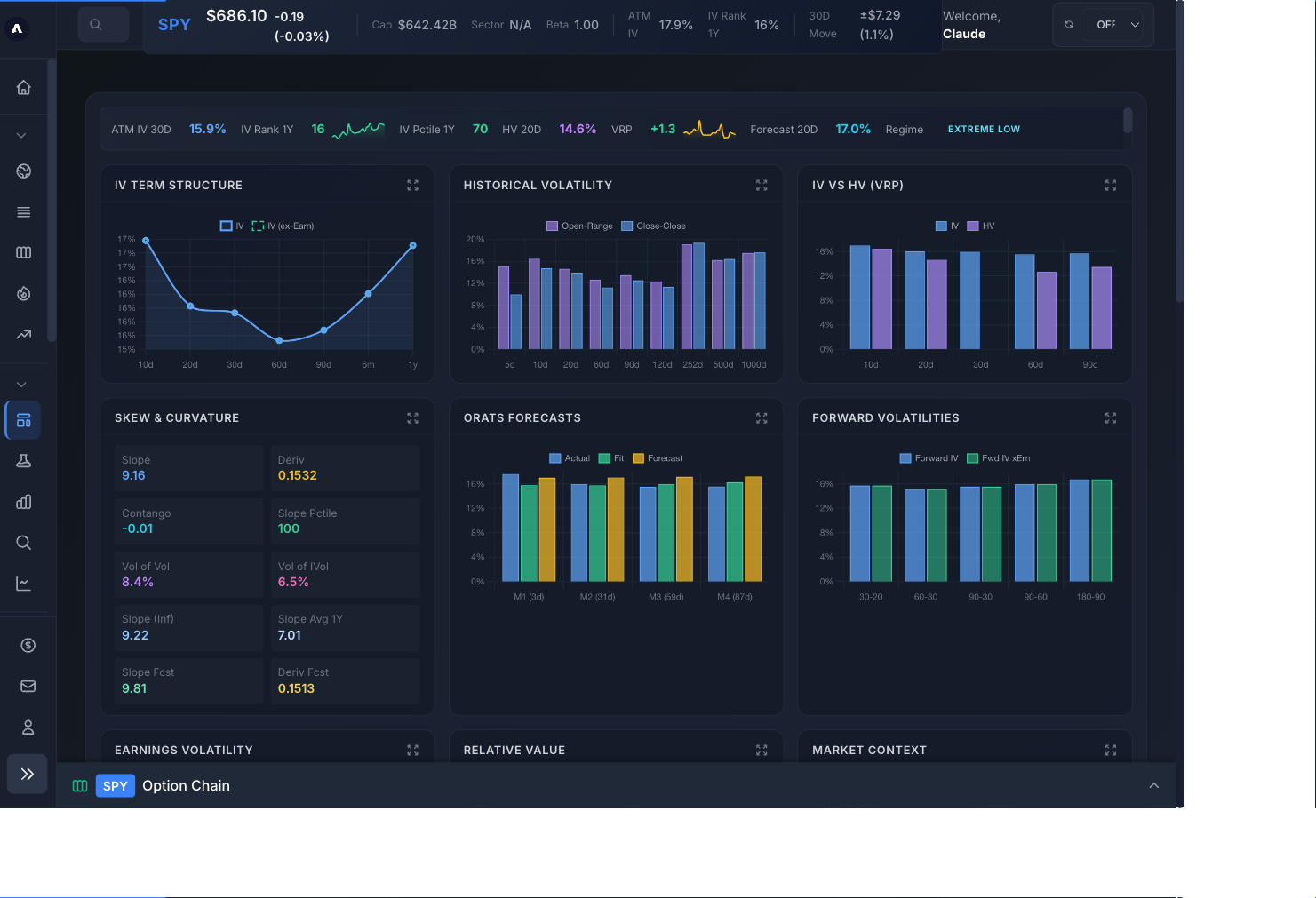
The options market is pricing in remarkably low volatility across major indices and mega-cap technology stocks. With SPY IV Rank sitting at just 16 and most large-cap names showing depressed implied volatility, traders face a clear regime signal: premiums are cheap. Here's our analysis of where IV stands today and what it means for your options strategies.
IV Rank Snapshot: 10 Key Tickers
We scanned 10 of the most actively traded options names to assess the current volatility landscape. The results show a market overwhelmingly in low-IV territory, with only AMD holding near its historical midpoint.
| Ticker | IV Rank | IV Percentile | Current IV | State | Recommendation |
|---|---|---|---|---|---|
| AMD | 45.4 | 81.8% | 54.9% | NORMAL | IV at typical levels |
| MSFT | 40.4 | 92.5% | 28.0% | NORMAL | IV at typical levels |
| NVDA | 28.2 | 60.7% | 40.8% | LOW | Favorable for debit spreads |
| AMZN | 27.9 | 75.4% | 32.1% | LOW | Favorable for debit spreads |
| GOOGL | 24.2 | 63.9% | 30.9% | LOW | Favorable for debit spreads |
| QQQ | 21.3 | 72.2% | 21.1% | LOW | Favorable for debit spreads |
| META | 20.9 | 67.1% | 32.4% | LOW | Favorable for debit spreads |
| AAPL | 18.9 | 67.1% | 25.5% | VERY_LOW | Consider buying premium strategies |
| SPY | 16.3 | 69.8% | 15.9% | VERY_LOW | Consider buying premium strategies |
| TSLA | 9.7 | 9.5% | 42.8% | VERY_LOW | Consider buying premium strategies |
Data from ApexVol IV Analytics — February 19, 2026
AMD: The Outlier
AMD stands out as the only ticker with IV Rank near 50 (45.4), suggesting it's priced closest to fair value. Most mega-caps are showing depressed IV — a pattern that often precedes volatility expansion.
What Is IV Rank?
IV Rank measures where current implied volatility stands relative to its 52-week range on a 0-100 scale. An IV Rank above 50 means volatility is in the upper half of its annual range, making premium-selling strategies more attractive. Below 30 suggests options are cheap, favoring debit spreads and long premium.
IV Rank differs from IV Percentile — while Rank measures where current IV falls within the high-low range, Percentile measures what percentage of days over the past year had lower IV. Both are valuable, but IV Rank is more commonly used for strategy selection. You can track both metrics on our IV Dashboard and learn more in our educational guide.
Get Options Insights Weekly
IV analysis, earnings previews, and strategy ideas delivered to your inbox.
Create Free AccountVolatility Risk Premium Assessment
The volatility risk premium (VRP) compares implied volatility to realized (historical) volatility. When IV exceeds RV, options are theoretically overpriced — sellers have an edge. Let's see where the VRP stands for our key names today.
| Ticker | Implied Vol | Realized Vol | VRP | Signal | Assessment |
|---|---|---|---|---|---|
| SPY | 15.9% | 11.2% | N/A | N/A | NORMAL_PREMIUM |
| QQQ | 21.1% | 15.0% | N/A | N/A | HIGH_PREMIUM |
| NVDA | 40.8% | 34.3% | N/A | N/A | HIGH_PREMIUM |
| TSLA | 42.8% | 35.2% | N/A | N/A | HIGH_PREMIUM |
| AAPL | 25.5% | 25.9% | N/A | N/A | NORMAL_PREMIUM |
Data from ApexVol Volatility Lab — February 19, 2026
QQQ and NVDA show the widest VRP gap, with implied vol exceeding realized vol by 6+ percentage points. This suggests that despite low IV Rank levels, options in these names still carry a modest premium over what the stocks have actually been moving. SPY and AAPL show tighter spreads, meaning options are more fairly priced relative to recent movement.
Low IV Regime: Favor Buying Premium
With SPY IV Rank at just 16 and QQQ at 21, broad market implied volatility is near 52-week lows. This favors debit spreads and long premium strategies over credit spreads. Consider buying cheap protection while it's available.
Strategy Implications
The current low-IV environment creates a clear playbook for options traders:
- Favor buying premium: Debit spreads on NVDA, GOOGL, and META offer relatively cheap entry points.
- Calendar spreads shine: Buy longer-dated options (cheaper IV) and sell shorter-dated against them for theta income.
- Hedge cheaply: Protective puts on SPY and QQQ are near 52-week lows in cost — a good time to add portfolio insurance.
- Avoid aggressive premium selling: Credit spreads and iron condors collect thin premiums that may not compensate for tail risk.
Low IV Can Stay Low
Low IV environments can persist for weeks. Don't assume a snap-back is imminent — use defined-risk strategies and manage position size.
Frequently Asked Questions
What is a good IV Rank for selling options?
An IV Rank above 50 is generally considered favorable for premium-selling strategies like iron condors, credit spreads, and short strangles. The higher the IV Rank, the more premium you collect relative to the stock's historical volatility range. Above 70 is considered elevated.
Why is SPY IV Rank so low right now?
SPY IV Rank at 16 reflects a period of below-average implied volatility. This typically occurs during sustained uptrends with low realized movement. The VIX near multi-year lows confirms the broad market is pricing in continued calm — though historically, these periods eventually give way to volatility expansion.
Should I buy or sell options when IV Rank is low?
When IV Rank is below 30, options premiums are relatively cheap. This environment generally favors buying strategies — debit spreads, long calls/puts, and calendar spreads. Selling premium in low IV can lead to small credits that don't adequately compensate for the risk of a volatility spike.
Disclaimer: This analysis is for educational purposes only and does not constitute financial advice. Options trading involves significant risk of loss and is not suitable for all investors. Past performance does not guarantee future results. Always conduct your own research and consult with a qualified financial advisor before making investment decisions.
Explore More Tools
Get the Weekly Options Brief
Market analysis, IV opportunities, and strategy ideas delivered every Monday.
No account needed. Unsubscribe anytime.