ApexVol Terminal
Options analytics, live.
Chains, IV rank, expected move and dealer positioning for 5,500+ US stocks and ETFs.

Free on AAPL, no account. Trial: no charge if you cancel before it ends.
On this page
What this one covers
- Understand how cost of carry affects options pricing
- Learn to identify forward conversion opportunities
- Execute reverse conversions for synthetic positions
- Use ApexVol's analytics to spot pricing inefficiencies
The same thing, in writing
What is Cost of Carry?
Cost of carry is a fundamental concept in options pricing that represents the net cost of holding a position over time. It includes interest rates, dividends, and storage costs. Understanding cost of carry is essential for identifying arbitrage opportunities and pricing synthetic positions accurately.
Forward Conversions
A forward conversion combines a long stock position with a long put and short call at the same strike and expiration. This creates a risk-free position that should earn the risk-free rate minus dividends. When the market misprices this relationship, arbitrage opportunities emerge.
Reverse Conversions
The reverse conversion is the mirror image: short stock, short put, long call. Professional traders use this to exploit situations where put-call parity is violated. We demonstrate how to use ApexVol's options chain and Greeks data to identify these opportunities in real-time.
Practical Application
Using ApexVol's real-time data, we walk through identifying cost of carry discrepancies on SPY options. The platform's 340+ data points per ticker make it straightforward to compare theoretical vs. market prices and spot when conversions offer favorable risk-reward.
Topics
- cost of carry
- conversions
- arbitrage
- advanced strategy
ApexVol Terminal
Options analytics, live.
Chains, IV rank, expected move and dealer positioning for 5,500+ US stocks and ETFs.

- Live chains and Greeks
- IV rank and percentile
- Expected move and GEX
- Screener and strategy P&L
Free on AAPL, no account. Trial: no charge if you cancel before it ends.
Try this with real market data. 5,500+ stocks, live options chains, IV analytics and P&L. 7-day free trial.
Keep going
Where this one
leads next.
The rest of the series, and the written guides behind what you just watched.
Watch it once.
Then run it yourself.
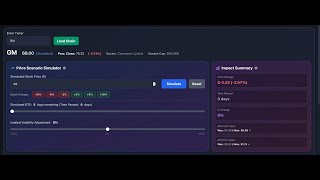
Everything in this video happens on a real chain in the Terminal. A free account opens the Terminal on AAPL with no card, and every plan starts with a 7-day free trial.
Real market data, not a sandbox. See it live on AAPL.